AI meeting notes · How-to guide
How to take AI notes in face-to-face meetings
AI note-taking apps designed for Zoom or Teams join meetings as a bot participant. They need a call link to enter. A face-to-face meeting in a physical room has no call link. Most AI note-takers simply do not work there. A device that records and transcribes in-person audio handles the whole session: capture, transcription, and structured notes, without a video conference platform.
 Works without a call link
Quick answer
4 steps to AI notes from any face-to-face meeting
Most AI note-taking tools work as bots that join a video call. Face-to-face meetings have no call platform. The steps below cover getting AI notes from an in-person meeting using a physical recording device.
1. Inform all participants and confirm consent before recording
Let everyone in the meeting know you are recording. Confirm they agree before you start. Recording a person in a face-to-face meeting without their knowledge is not appropriate and may be illegal in your jurisdiction. Always obtain consent before pressing record.
2. Choose a physical device that captures in-person audio without requiring a call link
Apps that join a meeting as a bot need a Zoom or Teams call to enter. A face-to-face room has no call link. A dedicated recording device captures in-person audio directly and works in any physical space.
3. Position or wear the device before the meeting begins
Placement affects transcription accuracy. A device worn at collar or wrist level stays close to the speaker throughout the conversation. Clip or place the device before the meeting starts so there is no interruption when the discussion begins.
4. Sync and review the AI-generated notes after the meeting
Upload or sync the recording to the AI app. Review the structured output for decisions, action items, and follow-ups while context from the meeting is still fresh.
Methods
Most AI note-takers require a call link. Here is what works in a physical room.
Compared on whether the method works without a call link, how visible the device is during a 1-on-1, whether the setup is hands-free, and whether AI transcription is included.
AI meeting bot (Otter, Fireflies as call participant)
A bot joins the Zoom or Teams meeting and records the session. The bot needs an invitation link to enter. In a face-to-face room with no video call running, there is no link to send. The bot cannot enter a physical room.
Phone app on table
Records in-person audio through the phone microphone without a call link. The phone sits visibly on the table, which signals to the other person that recording is happening.
Laptop mic capture
Records in-person audio through the laptop microphone. No call link required. The laptop creates a physical and visual barrier in a face-to-face meeting.
Plaud NotePin S (wearable recorder)
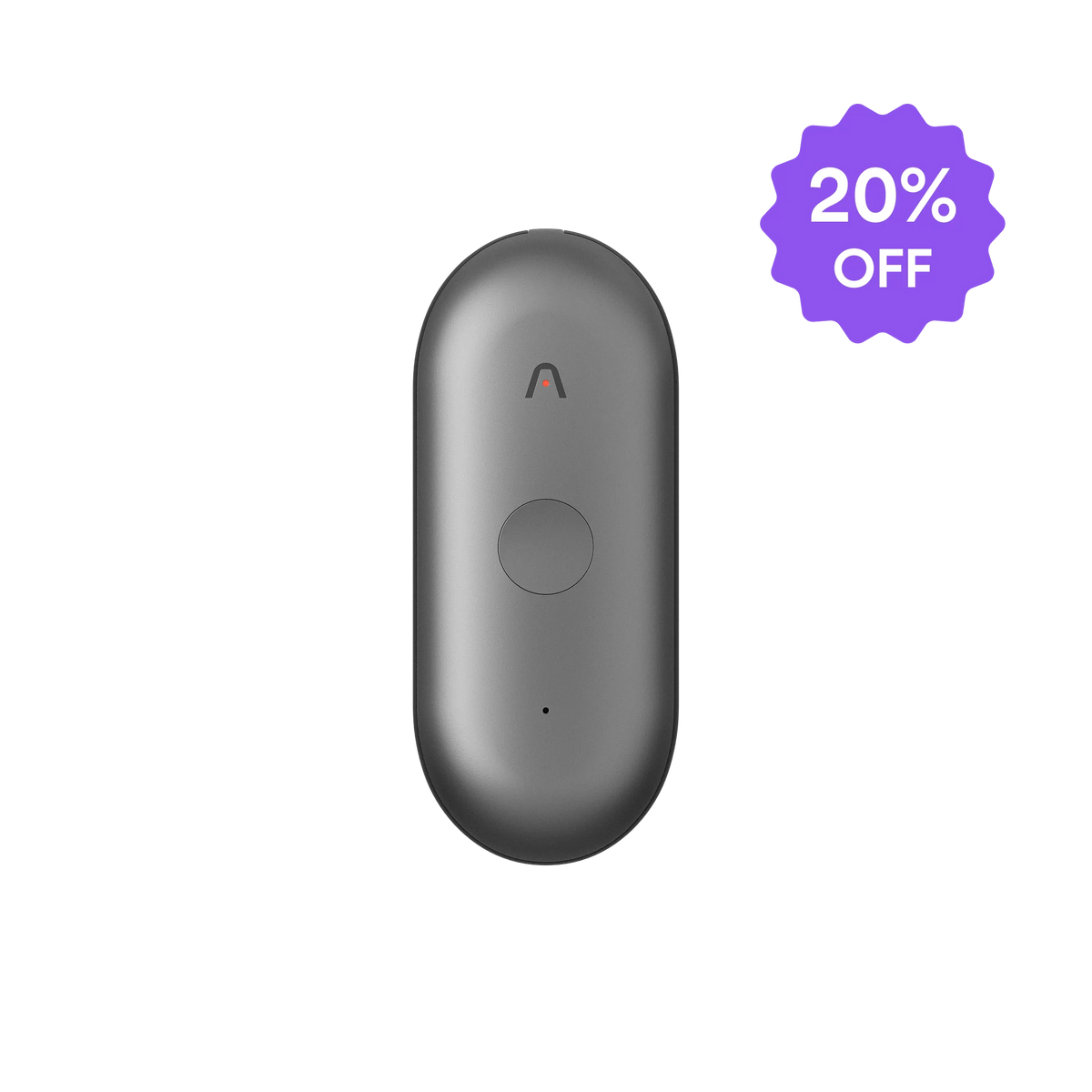
Clips to a collar, attaches as a magnetic pin, wears as a wristband, or hangs on a lanyard. Worn close to the speaker, it captures up to 20 hours of in-person audio. Plaud Intelligence transcribes and produces structured notes after the session.
Based on publicly available information about the tools mentioned and Plaud product data. Always obtain consent from all participants before recording any meeting.
Tips
Why meeting bots fail in a physical room, and what to use instead
Bot-based AI note-takers work by joining a video call as a participant. They receive an invite link, enter the meeting room, and record the session through the call platform. That process depends on one thing: a call link. A face-to-face meeting in a physical room has no call link to send. The bot has no way to enter. Trying to use Otter or Fireflies in an in-person meeting requires opening a Zoom call on a device in the room just to give the bot access. A physical recording device with AI transcription avoids the workaround. It records in the room, processes the audio through AI after the session, and returns structured notes without a video call platform.