In February 2026, Kelly Slessor, Founder of Tribe Gen AI, brought together a private room of senior leaders in Sydney — founders, GMs, and functional leaders navigating AI not in theory, but in practice.
The intent wasn’t to host another AI event. It was to create a space for honesty. “There’s so much AI content out there right now — keynotes, LinkedIn posts, vendor decks — and almost none of it reflects how operators actually feel behind closed doors,” Kelly explained.
Behind the headlines and strategy decks, leaders are dealing with something far messier: unclear starting points, internal resistance, failed experiments, and the pressure to move fast without certainty. The AI Leaders Lunch was designed to surface that reality—what’s actually happening inside organisations as they try to turn AI from ambition into execution.

The Gap Between AI Ambition and Execution
One of the clearest patterns to emerge from the room was the widening gap between what companies say they are doing with AI and what is actually being implemented.
“Ambition looks like a strategy slide with a lot of use cases and a vision statement. Execution looks like knowing which three repetitive tasks your team does every week that consume the most time, and having already done something about two of them.”
The organisations making progress were not chasing perfection. They were starting with specific problems, testing quickly, and building incrementally. In contrast, many others remained stuck in planning mode—waiting for the “right” use case or tool.
At the same time, there was a growing sense of urgency. “Waiting for ‘ready’ is its own decision—and it has consequences.” Those who had already moved beyond pilots into real deployment were beginning to pull ahead.
AI Doesn’t Fix Organisations—It Reveals Them
Another key insight from the discussion was that AI itself is rarely the hardest part.
“Technology is the easy part. The harder challenge is organisational—culture, capability, and the human systems AI sits on top of.” AI doesn’t resolve underlying issues. As one leader in the room put it: “You can't layer AI onto a dysfunctional team and expect magic. You just get a faster version of broken.”
Even as AI rapidly improves output, the final layer—judgement, context, and trust—remains human. That “last mile” is where differentiation lives, and where organisations must learn how to combine AI capability with human intelligence effectively.
The Missing Layer: Conversation as Data
While much of the AI conversation focuses on tools and automation, Kelly points to a more fundamental gap: what organisations are choosing to capture. “Most organisations are collecting transactional data, behavioural data, operational data. Almost none are systematically capturing the conversations where strategy is made.”
These conversations—strategy sessions, advisory discussions, workshops—are where real decisions take shape. They are also where problems are reframed, challenged, and clarified.
Yet in most organisations, this layer of intelligence is lost. “Memory is selective and self-serving. People remember the things that confirmed what they already believed. Accurate capture means you preserve the things that challenged you too."
Without structured capture, insight fragments. What was once a collective intelligence becomes a set of disconnected takeaways, filtered through individual bias.
Capturing Insight Without Changing the Room
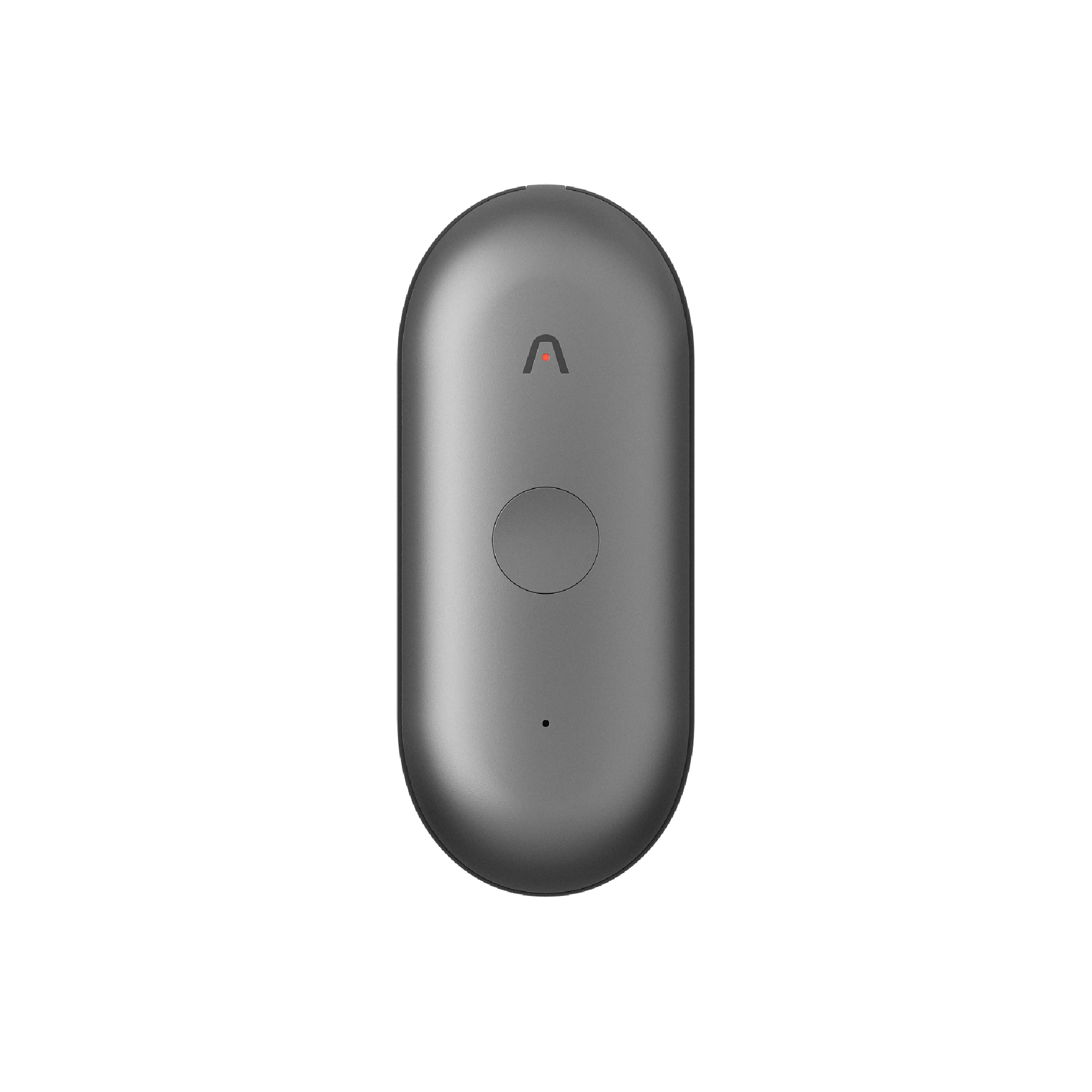
At the AI Leaders Lunch, Plaud devices were introduced as a quiet layer of infrastructure — one device per table, supporting discussion without interfering with it. What stood out was what didn’t happen. “No one was distracted by it, no one was performing for it… Plaud was invisible.”
In a room built on trust, that invisibility matters. When participants feel observed, conversations shift. When they don’t, the signal improves. For Kelly, it also changed how she facilitated the session. “Knowing the conversation was being accurately captured meant I could be fully present in the room.”
Instead of splitting focus between listening and note-taking, she could concentrate on what matters most: guiding discussion, surfacing insight, and reading the room in real time.
From Transcription to Meaning
In professional environments, capturing words is not enough. What matters is capturing meaning.
“Generic tools are built for accuracy of transcription. Purpose-built tools are built for accuracy of meaning.”
Meaning lives in context—in how ideas evolve, how different voices connect, and how insight builds across a conversation. Without that structure, transcripts become difficult to use, often requiring as much effort to interpret as the original discussion itself.
By contrast, structured outputs — clear notes, organised themes, and models—allow teams to move directly from conversation to action.
“If the capture is good, the synthesis almost writes itself.”
The Moments That Matter Most
In advisory and leadership settings, the most valuable insights are rarely the ones planned in advance.
“The moment where a founder says something to me that reframes their entire problem — and they don't realise they've said it. That happens constantly in advisory conversations.”
These moments are easy to miss. They often appear as side comments or passing observations, yet they can completely reframe a problem or unlock a new direction.
Capturing them requires two things: presence and precision. With Plaud, leaders no longer have to choose between the two.
Winning in the AI Era
If there was one consistent message from the room, it’s that success in the AI era will not come from abstract strategies or broad ambitions. It will come from focus.
“Find the task your team does most often that they hate… Solve that, measure it, and build from there.”
The organisations moving forward are those that:
-
Act early
-
Solve real problems
-
Capture what they learn
-
And build momentum through execution
In a world saturated with AI noise, the advantage belongs to those who can turn real conversations into real outcomes.